Category: Spiritual Formation

  • Come and See: Staying Near Jesus

    Come and See: Staying Near Jesus

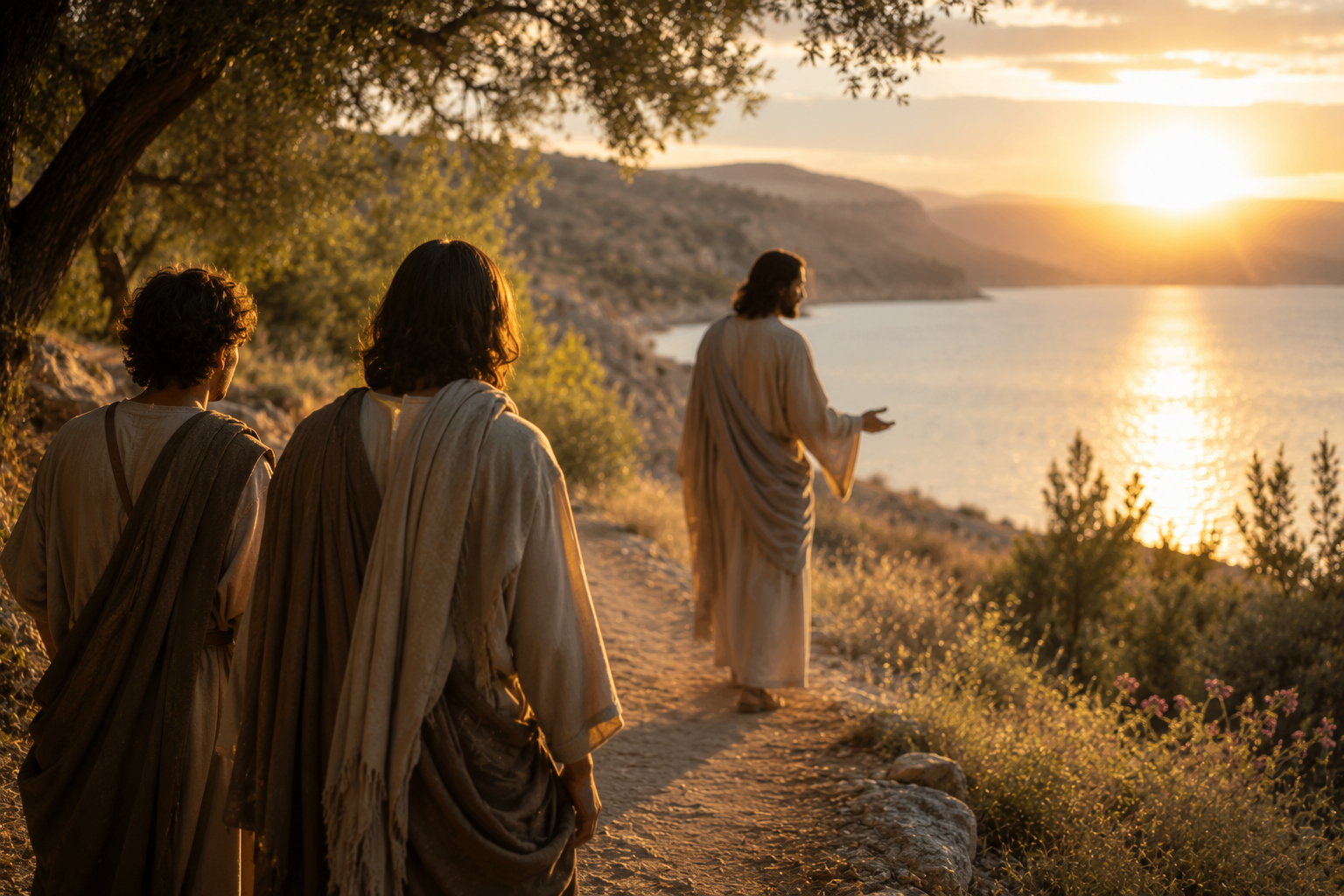
    John 1:35–39 gives us a quiet beginning.

    Two disciples hear John the Baptist point to Jesus and say, “Behold, the Lamb of God.” They begin to follow. Jesus turns and asks them his first recorded words in John’s Gospel: “What are you looking for?”

    That question reaches far beyond the moment.

    It is not only a question for those first disciples. It is a question every believer continues to answer throughout life. What are you looking for? What do you seek when you come to prayer, when you open Scripture, when you order your days as you do? What are you hoping Jesus will be for you?

    These are not small questions. They are not meant to be answered quickly.

    This is one reason John 1:35–39 is so well suited to Lectio Divina. Lectio Divina is the slow, prayerful reading of Scripture, a way of listening rather than merely scanning. We read attentively, notice what draws our attention, respond in prayer, and remain quietly with the text. This passage invites exactly that kind of reading because it centers on desire, presence, and the beginning of relationship.

    Jesus does not begin by offering a lecture. He begins with a question.
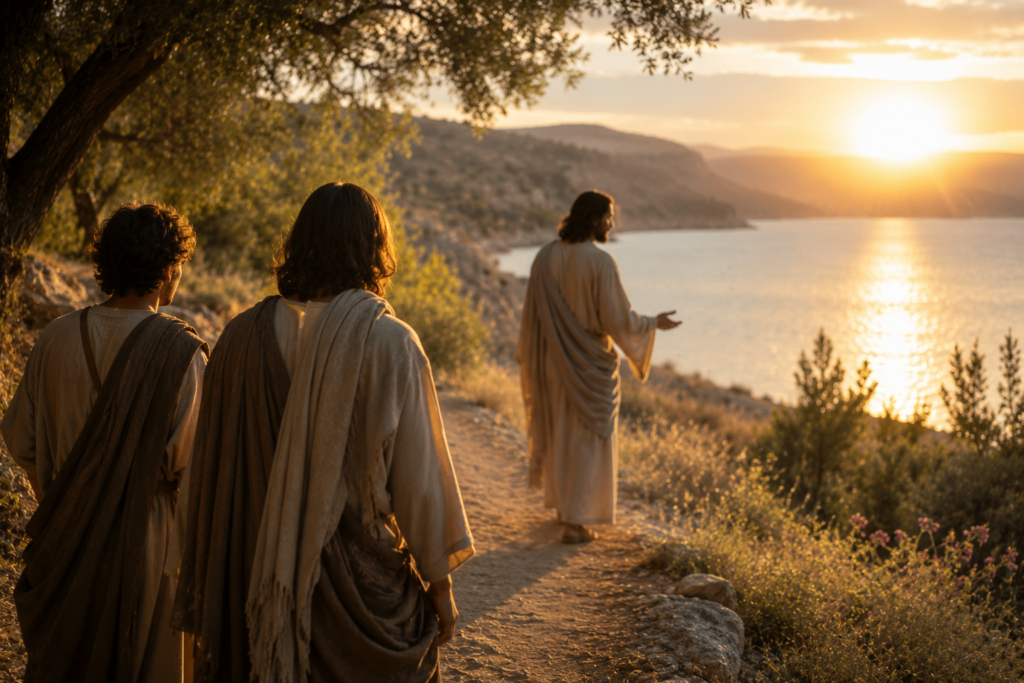
    Come and See Jesus

    What Are You Looking For?

    The question is simple, but it is not superficial.

    Jesus does not ask, “What do you know?” He asks, “What are you looking for?” He speaks to desire before he speaks to certainty. He addresses the heart before the intellect. He invites honesty before explanation.

    Many of us are used to speaking about faith in terms of belief, doctrine, or commitment. Those things matter deeply. But beneath them often lies a more hidden layer of longing. We come to Christ with ambitions, fears, griefs, hopes, needs, and expectations. Some of them are noble. Some are confused. Some are mixed together in ways we do not fully understand.

    Jesus’ question makes room for that complexity.

    It invites examination without shame. It asks us to tell the truth about what moves us. Not the polished answer. The real one.

    Very often, our daily choices reveal what we are looking for more clearly than our stated beliefs do. The way we spend time, the thoughts we return to, the worries we rehearse, the comforts we reach for, the approval we chase—these can all uncover the deeper movements of the heart.

    To hear Jesus ask, “What are you looking for?” is to be called into gentle self-examination.

    Hearing About Jesus and Encountering Him

    The two disciples had already heard about Jesus before they followed him.

    John the Baptist had spoken truly. His testimony mattered. But hearing testimony is not the same thing as personal encounter. At some point, borrowed language must give way to lived relationship.

    That is what begins here.

    The disciples respond, “Rabbi, where are you staying?” On one level, it is a practical question. On another, it reveals something deeper. They want more than a passing exchange. They want proximity. They want to remain near him long enough to know him.

    Jesus answers, “Come and you will see.”

    This is one of the most beautiful invitations in the Gospels because it does not force certainty before relationship begins. Jesus does not say, “Understand everything first.” He does not say, “Prove your worthiness.” He does not even begin with a full explanation of what discipleship will cost. He says, in effect: come closer. Stay near. See for yourself.

    Faith often begins there.

    Not with having all the answers, but with willingness. Not with a dramatic moment alone, but with the decision to draw near and remain.

    Curiosity Is Not the Enemy of Faith

    Some believers have been taught to distrust curiosity, as though honest questions signal weakness. But in John 1, curiosity is part of the beginning.

    The disciples do not yet know everything. They do not fully understand who Jesus is. But they are drawn. They follow. They ask where he is staying. Their questions are not obstacles to discipleship; they are part of its first steps.

    There is a kind of premature certainty that can actually keep us at a distance from Christ. We may cling to tidy answers because they feel safe. We may prefer conclusions over communion. But Jesus invites something more personal and more costly: time with him.

    Curiosity, when offered honestly, can be an opening to grace.

    It allows us to ask without pretending. It makes space for wonder. It helps us resist the temptation to reduce faith to slogans. It teaches us to seek, not merely to repeat.

    This kind of seeking is not opposed to trust. It is often one of the ways trust begins to grow.

    John 1:35-39, ESV

    The next day again John was standing with two of his disciples, and he looked at Jesus as he walked by and said, “Behold, the Lamb of God!” The two disciples heard him say this, and they followed Jesus. Jesus turned and saw them following and said to them, “What are you seeking?” And they said to him, “Rabbi” (which means Teacher), “where are you staying?” He said to them, “Come and you will see.” So they came and saw where he was staying, and they stayed with him that day, for it was about the tenth hour.

    The Importance of Proximity

    One of the central movements in this passage is simple: the disciples go with Jesus, “and they stayed with him that day.”

    That small detail carries tremendous weight.

    We cannot know Christ from a distance. We may know ideas about him, opinions about him, even correct theology about him. But discipleship is formed through nearness. Through abiding. Through repeated return.

    In ordinary Christian life, that nearness is cultivated through habits that seem modest and unspectacular: prayer, Scripture, silence, worship, repentance, attentiveness. These are not ways of earning intimacy with Christ. They are ways of making room for it.

    To remain near Jesus requires time.

    It requires resisting the hurried habits that make all relationships shallow. It requires a willingness to be interrupted, corrected, and changed. It asks us to stay long enough that our stated desires and our actual desires can be brought into the same light.

    Contemplative practice is especially helpful here. It teaches us not merely to learn about Jesus, but to remain with him. It slows us enough to notice what we are carrying into his presence. It helps us become attentive to the ways our desires are purified and redirected over time.

    Desire and the Christian Life

    Jesus’ question brings desire into the center of discipleship.

    This matters because desire is not incidental to the spiritual life. It shapes it. What we seek, love, fear, and hunger for will quietly direct how we live. The Christian life is not only about managing behavior or affirming truths. It is also about the transformation of desire.

    That transformation rarely happens all at once.

    Often we begin by wanting many things at once. We want God, but we also want control. We want peace, but we also want the world arranged on our terms. We want holiness, but we also want comfort. We want to follow Jesus, but we hope he will not ask us to surrender the deeper attachments we protect.

    John 1 does not condemn this complexity. It exposes it gently.

    “What are you looking for?” is not asked to humiliate us. It is asked to lead us into truth. Christ meets us in our mixed motives, but he loves us too much to leave them unexamined. Over time, staying near him reveals what governs us and what must be surrendered.

    Honest Questions Instead of Easy Answers

    There is a spiritual discipline in asking honest questions and letting them remain open before God.

    Not every question must be solved immediately. Some questions are meant to deepen us before they clarify us. Some are invitations to prayer more than problems to resolve.

    John 1:35–39 shows us a way of beginning. The disciples do not arrive with polished spiritual language. They respond from where they are. They move toward Jesus with what light they have.

    That is enough for a beginning.

    Many people delay prayer because they think they need cleaner motives or firmer conviction first. But the passage suggests otherwise. Christ’s invitation meets us in motion. As we come, we see. As we stay, we learn. As we remain, we are changed.

    Transformation often begins quietly, almost imperceptibly. Not always through dramatic conversion stories, but through the repeated choice to come and stay.

    The Hour They First Stayed With Him

    John includes an intriguing detail: “It was about the tenth hour.”

    Why remember the time?

    Because encounters with Christ leave marks. Something about that first staying was so significant that the memory remained vivid. It was not merely a transfer of information. It was an experience of presence.

    Many believers can point to such moments. Not always spectacular ones. Sometimes they are quiet and deeply personal: a passage that opened unexpectedly, a prayer in which Christ felt near, a day when everything did not change outwardly but something shifted inwardly. These moments remain because relationship leaves an impression.

    Yet John 1 also reminds us that the lasting memory came not from a brief glance, but from staying.

    There is wisdom here for our own lives. We often want immediate clarity, but Christ frequently forms us through continued presence. The significant hour may begin with a simple willingness to remain.

    A Writing Practice: “What I Am Looking For”

    Today’s contemplative writing exercise can help bring Jesus’ question closer.

    Take a few quiet minutes and write under the heading:

    What I am looking for

    Write honestly.

    Include practical desires as well as spiritual ones. You may find yourself writing about rest, stability, recognition, healing, clarity, love, usefulness, freedom from anxiety, deeper prayer, or simply enough strength for today. Do not censor too quickly. Let the page reveal what the heart has been carrying.

    Then read over what you have written and pause with the one answer that surprises you most.

    Stay with it.

    Ask why it surfaced. Ask what it reveals. Ask whether it is something Christ wants to purify, deepen, redirect, or gently receive. This practice can uncover the deeper movements of the heart that Jesus invites us to examine—not to shame us, but to draw us nearer in truth.

    Sometimes we do not know what we are looking for until we see it in words.

    Come and See Through Lectio Divina

    This passage naturally lends itself to Lectio Divina because it is full of invitation.

    Read it slowly once.

    Then read it again and notice which phrase holds your attention. Perhaps it is “What are you looking for?” Perhaps it is “Where are you staying?” Perhaps it is “Come and you will see.” Or perhaps it is simply the quiet line that they “stayed with him that day.”

    Let one phrase remain with you.

    Do not hurry to explain it. Let it question you. Let it settle. Pray with it. Sit with Christ in the words. The goal is not to master the passage quickly, but to spend time with the One the passage reveals.

    This is where contemplative practice becomes so valuable. It teaches us to remain with Christ long enough that desire can be examined, clarified, and healed.

    Staying With Christ in Ordinary Life

    Most discipleship is lived in ordinary hours.

    Not on mountaintops, but in routines. In the choices we make with our mornings, our attention, our words, our devices, our fatigue, our small obediences. Proximity to Christ is formed there.

    To come and see is not only an invitation for the beginning of faith. It remains an invitation throughout the Christian life. Come again. Stay again. Return again.

    If you would like help cultivating that daily rhythm, The Morning Scriptorium: 365 Days of Lectio Divina and Contemplative Writing offers a full year of Scripture readings, guided reflections, writing prompts, prayers, and contemplative practices.

    And the online course:
    https://teachclub.com/@morning_scriptorium

    Come and Stay

    John 1:35–39 does not invite us merely to learn about Jesus.

    It invites us to spend time with him.

    That is where discipleship begins and where it continues: in attentive presence, in honest desire, in questions offered without pretense, in the quiet courage to come closer. We do not need to arrive with complete understanding. We need willingness to follow and remain.

    So perhaps that is the invitation for today.

    Not to solve everything.
    Not to force spiritual certainty.
    But to hear Jesus ask, “What are you looking for?” and to answer honestly. Then to receive his words as they are given: Come and you will see.

    Spend time with Christ today, not merely learning about him but remaining near him.

    Closing Prayer

    Lord Jesus,
    You know what I am looking for even when I struggle to name it.
    Draw me near to you with honesty and trust.
    Teach me to remain with you long enough for my desires to be purified and my heart made more true.
    Give me grace to come, to stay, and to see.
    Amen.

    Reflection Questions

    1. When Jesus asks, “What are you looking for?” what honest answer rises first in your heart?

    2. Where in your life are you tempted to keep Jesus at a distance rather than remain near him?

    3. What simple practice could help you spend time with Christ this week rather than merely thinking about him?

    Return Tomorrow

    Return tomorrow for the next day’s Lectio Divina reading, and continue this slow journey of prayerful attention in the presence of Christ.

    If you’d like, share in the comments what question Jesus’ words, “What are you looking for?” stirred in your heart today.

  • Open My Eyes to Wonder

    Open My Eyes to Wonder

    Psalm 119:17–24 contains one of the most honest and necessary prayers a reader of Scripture can offer: “Open my eyes, that I may behold wondrous things out of your law.”

    open my eyes

    It is a simple prayer, but not a casual one.

    The psalmist does not assume that seeing comes naturally. He does not presume that because the words are in front of him, their depth will be obvious. He asks for opened eyes. He asks for help. He asks for grace.

    That alone should slow us down.

    Many of us know what it is to read biblical words without really receiving them. We recognize the passage. We know what comes next. We have heard the phrase before, perhaps many times. Familiarity can be a gift, but it can also become a veil. Repeated exposure does not always deepen wonder. Sometimes it dulls it. We begin to glance at sacred things rather than behold them.

    Psalm 119 gives us another way. It teaches us to come to Scripture with humility, attentiveness, and a willingness to see more than we expected.

    The Danger of Reading Without Seeing

    There is a difference between reading words and having our eyes opened.

    We can move through a passage quickly, understand its basic meaning, and still miss what God is placing before us. We can approach Scripture as information to manage, arguments to confirm, or material we have already mastered. In those moments, we may still be reading, but we are no longer really looking.

    The psalmist’s prayer suggests that true perception is received.

    That does not diminish the importance of study, thought, or careful interpretation. It simply places them in the right posture. Understanding is not an achievement we possess through intellect alone. It is also a gift. Light must be given. Eyes must be opened.

    This is why humility is not optional in reading the Bible. Without humility, we tend to approach the text as if it exists to reinforce what we already know. With humility, we begin to allow the text to question us, interrupt us, and correct us.

    That kind of reading is slower. It is also more alive.

    Familiar Words, Forgotten Wonder

    One of the quiet struggles of the Christian life is that holy things can become overly familiar.

    We know the language of grace, faith, obedience, mercy, truth. We know the shape of the stories. We know the verses we have highlighted before. Yet what is familiar can become flattened by routine. The words remain true, but our attention weakens. We stop expecting surprise.

    The prayer “Open my eyes” is, in part, a resistance to that dullness.

    It is the refusal to treat God’s Word as ordinary simply because it is known. It is the recognition that Scripture contains more than we can grasp at a glance. It is a confession that the problem is not with the text, but often with our sight.

    This is one reason Lectio Divina remains such a needed practice. Lectio Divina is a slow, prayerful way of reading Scripture that invites us not merely to consume a passage, but to dwell with it. We read attentively. We notice what stands out. We pray in response. We rest quietly before God.

    Psalm 119:17–24 lends itself naturally to this kind of reading because it is already a prayer of dependence. It teaches us that seeing is not mechanical. It is relational. We do not simply inspect the text. We receive it before God.

    Humility Before the Text

    The psalmist’s words are not the words of someone standing above Scripture. They are the words of someone kneeling beneath it.

    That posture matters.

    In many areas of life, expertise can tempt us to move too quickly. We learn to categorize, summarize, and evaluate. These skills have their place. But when they become detached from humility, they can make us less teachable. We stop listening well because we assume we already understand.

    Biblical interpretation requires more than intelligence. It requires receptivity.

    To pray, “Open my eyes,” is to admit that insight cannot be forced. It is to recognize that wisdom is not the same as mental speed. It is to ask that the God who speaks through Scripture would also soften and illumine the heart of the reader.

    This kind of humility does not make us passive. It makes us attentive. It teaches us to approach God’s Word with patience, curiosity, and a willingness to be corrected.

    There are readings of Scripture that leave us confirmed. There are also readings that leave us changed. Usually the difference lies in whether we came to the text to control it or to receive it.

    Psalm 119:17-24

    Gimel

    Deal bountifully with your servant,

    that I may live and keep your word.

    Open my eyes, that I may behold

    wondrous things out of your law.

    I am a sojourner on the earth;

    hide not your commandments from me!

    My soul is consumed with longing

    for your rules at all times.

    You rebuke the insolent, accursed ones,

    who wander from your commandments.

    Take away from me scorn and contempt,

    for I have kept your testimonies.

    Even though princes sit plotting against me,

    your servant will meditate on your statutes.

    Your testimonies are my delight;

    they are my counselors.

    Slowing Down Enough to Be Challenged

    Many of us read too quickly to be surprised.

    We move through the passage, gather the central point, and move on. But speed often protects our assumptions. It keeps us from noticing details that unsettle us. It allows us to remain in charge of what the text is allowed to mean.

    Slow reading is different.

    When we linger, we begin to see what we would normally overlook. A phrase carries more weight than we first noticed. A repeated image begins to matter. A verse we thought we understood opens into something larger, or perhaps something more searching.

    This is one of the quiet gifts of contemplation. It creates enough space for Scripture to do more than decorate our existing beliefs. It lets the text speak with its own force.

    Psalm 119 reminds us that wonder is often found on the far side of patience. Not every passage gives up its riches immediately. Some truths must be waited on. Some insights arrive only after repeated reading, honest prayer, and the humility to admit that we do not yet see clearly.

    Learning to Look Twice

    The prayer for opened eyes is not only about Bible reading. It shapes the whole life of attention.

    People who learn to notice carefully in Scripture often begin to notice more carefully elsewhere as well. They see what others pass over. They become less hurried in judgment, more patient in observation, more awake to ordinary details. They learn that looking twice can be a spiritual discipline.

    This is part of what contemplative practice forms in us.

    We begin by attending to God in Scripture, but that attentiveness slowly trains us to recognize traces of God’s presence in daily life: a conversation that calls for gentleness, a moment of beauty we nearly ignore, a grief we have been too busy to name, a small mercy arriving without drama.

    Attention itself can become an act of worship.

    To pay careful attention is to admit that we are not the center, that reality is fuller than our first glance suggests, and that God may be speaking in ways we miss when we move too quickly. This is not romanticism. It is reverence.

    A Stranger Dependent on Grace

    In Psalm 119:19, the psalmist says, “I am a sojourner on the earth.”

    There is vulnerability in that confession.

    To be a stranger is to live without complete mastery. It is to know what it means to need guidance, to depend, to ask for direction rather than assume certainty. Spiritual growth often takes place in exactly that condition. Not when we feel fully settled and self-assured, but when we know our need.

    Many believers quietly resist this dependence. We want confidence without vulnerability. We want clarity without waiting. We want understanding without the humility of asking for it.

    But the psalmist shows us another path. He does not hide his neediness. He brings it into prayer. He asks for opened eyes because he knows he cannot generate sight on his own.

    That is not weakness. It is wisdom.

    There is a mature kind of faith that becomes more dependent, not less. Not because it has learned nothing, but because it has learned how much is given by grace.

    “I Almost Missed…”

    One of the most practical ways to grow in this kind of attentiveness is to practice looking carefully at something small.

    Take several minutes today with a simple object: a leaf, a cup, a pen, a candle, a piece of bread, a worn book on your desk. Do not rush. Observe it more carefully than feels efficient. Notice shape, color, texture, shadow, wear, reflection, imperfection.

    Then write the sentence: “I almost missed…”

    Let the sentence continue on its own.

    You may find yourself describing the object more fully. You may find yourself reflecting on your own habits of inattention. You may discover that what began as creative observation has become prayer.

    This kind of exercise does more than sharpen description. It trains the soul. It teaches us that first glances are often incomplete. It helps us resist the laziness of assumption. It reminds us that seeing requires time.

    And that lesson carries back into Scripture. How many truths have we hurried past? How many invitations have we skimmed over? How often have we mistaken recognition for understanding?

    To “look twice” is not merely a literary or artistic habit. It is a discipline of spiritual formation.

    Contemplation and Ordinary Life

    Contemplative reading is sometimes misunderstood as a retreat from ordinary life. In reality, it can make us more present within it.

    As we learn to attend to Scripture slowly, we often become more attentive in the rest of our day. We begin to notice the pace at which we usually live. We recognize how often distraction governs our thoughts. We become more aware of what we nearly miss in our work, relationships, and prayers.

    This matters because God’s activity is not limited to dramatic moments. Much of the spiritual life unfolds in what appears ordinary. Daily bread. Small obediences. Quiet convictions. A passage read again. A needed correction. A subtle invitation to patience or mercy.

    Contemplative practice does not manufacture God’s presence. It trains us to notice what was already there.

    That is why the prayer of Psalm 119 remains so timely. “Open my eyes” is not only a request for biblical insight. It is a way of living with holy attentiveness before God.

    Returning to the Prayer

    The longer we stay with Psalm 119:17–24, the more fitting its prayer becomes.

    Open my eyes.

    Not only because Scripture is deep, but because I am often distracted.
    Not only because truth is beautiful, but because familiarity has made me careless.
    Not only because I need knowledge, but because I need humility.
    Not only because I want to read, but because I want to see.

    Readers who would like a complete year of daily Scripture readings, guided reflections, writing prompts, prayers, and contemplative practices can continue their journey through The Morning Scriptorium: 365 Days of Lectio Divina and Contemplative Writing.

    And the online course:
    https://teachclub.com/@morning_scriptorium

    These resources can help nurture a year-long rhythm of Scripture, contemplative reflection, prayer, and guided writing.

    Looking Twice as an Act of Worship

    Perhaps that is the invitation of today’s passage: to look twice.

    To look twice at Scripture.
    To look twice at ordinary life.
    To look twice at what we have assumed we already understand.

    And in that second look, to ask God for grace.

    Not every reading will feel dramatic. Not every moment of prayer will arrive with clarity. But attention offered humbly to God is never wasted. To read slowly, to notice carefully, to remain teachable—these are quiet forms of worship.

    So today, return to Psalm 119:17–24. Read it slowly. Sit with the prayer, “Open my eyes.” Let it become your own. And trust that God, who delights to make himself known, is able to teach you how to see.

    Closing Prayer

    Lord,
    open our eyes to behold the wonder of your Word.
    Deliver us from dullness, haste, and false certainty.
    Teach us to read with humility, to notice with patience, and to welcome your correction with trust.
    Make our attention an offering of love before you.
    Amen.

    Reflection Questions

    1. Where has familiarity with Scripture made you less attentive rather than more open to wonder?

    2. What might you need to slow down enough to truly see—either in God’s Word or in your ordinary life?

    3. If you completed the sentence “I almost missed…,” what might it reveal about your habits of attention?

    Return Tomorrow

    Return tomorrow for the next day’s Lectio Divina reading, and continue the slow work of learning to see with prayerful attention.

  • Psalm 46 Be Still in the Midst of Chaos

    Psalm 46 Be Still in the Midst of Chaos

    Psalm 46 is often remembered for one line: “Be still, and know that I am God.”

    Many people hear those words as if they belong to a quiet morning, a peaceful room, or a calm state of mind. But the psalm itself gives us a different setting. The earth gives way. Mountains fall into the sea. Waters roar. Nations rage. Kingdoms totter.

    This is not a peaceful backdrop. It is a world in upheaval.

    That matters, because it means biblical stillness is not reserved for ideal conditions. Psalm 46 speaks directly into disorder, fear, and instability. Its invitation is not, “Be still once life settles down.” It is: be still here. Be still while things shake. Be still while you do not know how everything will turn out.

    That is why this psalm lends itself so well to Lectio Divina. It teaches us to come to God honestly, slowly, and attentively, not after we have mastered ourselves, but in the middle of our unrest.

    Psalm 46 be still

    God Our Refuge When Life Feels Unstable

    The psalm opens with a declaration many believers have carried for centuries: God is “our refuge and strength, a very present help in trouble.”

    Not merely help in theory. Not distant comfort. Present help.

    Psalm 46 does not promise that faithful people will avoid trouble. It assumes trouble. It assumes that life will sometimes feel shaken at its foundations. The comfort of the psalm is not that upheaval never comes. The comfort is that God remains who he is when it does.

    That difference is important.

    There are seasons when faith is quietly sustained by routine, clarity, and familiar blessings. But there are other seasons when faith is reduced to something smaller and more essential: returning again to the truth that God is still present, still strong, still worthy of trust.

    This is refuge in the biblical sense. Not escape from reality, but shelter within it. Not immunity from sorrow, but a place to stand while sorrow does not have the final word.

    Stillness Is Not the Absence of Noise

    One reason Psalm 46 can be difficult to receive is that many of us associate stillness with emotional ease.

    We assume that being still means feeling peaceful, thinking clearly, and remaining unaffected by stress. If that is the definition, then many people will conclude they have failed before they begin.

    But contemplative stillness is something deeper and more realistic.

    Stillness is not the absence of noise. It is the practice of returning our attention to God within the noise.

    You may sit down to pray with a restless mind. You may carry grief, deadlines, disappointment, or fear. Your inner life may feel crowded. Your outer life may be no quieter. Psalm 46 does not require you to deny any of that. Instead, it invites you to re-center your attention in the midst of it.

    That is one of the quiet strengths of Lectio Divina. Rather than asking us to conquer distraction by force, it teaches us to return gently. We read a passage slowly. We notice a word or phrase that holds us. We stay with it. When the mind wanders, we come back. Not harshly. Not anxiously. Simply by returning.

    Psalm 46 is especially suited for this because its central movement is one of return. Return to refuge. Return to trust. Return to the God who is present.

    “Be Still” and the Illusion of Control

    The command “be still” can also be translated with the sense of ceasing, letting go, or releasing one’s grasp.

    That gives the verse a sharper edge than many people expect.

    Psalm 46 does not merely invite relaxation. It calls us to surrender the illusion that everything depends on our effort, our planning, our vigilance, or our anxiety. It confronts the restless belief that if we just think enough, manage enough, anticipate enough, or carry enough, we can secure ourselves.

    Most of us know, at least intellectually, that this is not true. And still, we return to anxious control because it feels more responsible than surrender.

    But surrender is not passivity.

    Trust in God does not mean refusing responsibility, neglecting wise action, or pretending circumstances do not matter. It means doing what faithfulness requires without treating ourselves as sovereign. It means releasing the fantasy that endless worry can save us.

    Psalm 46 calls us back to God’s unchanging character. He is the one who remains steady when the world is not. Stillness, then, is an act of trust. It is the refusal to hand ultimate authority to chaos.

    Peace Is Not Denial

    There is a kind of religious language that moves too quickly toward calm. It encourages people to speak as though everything is fine when it plainly is not.

    Psalm 46 offers a better way.

    The psalm does not minimize danger. It names it. Waters roar. Mountains shake. Nations rage. The world is not described as manageable or neatly resolved. Yet the psalm remains open to God’s presence within that reality.

    This is the difference between peace and denial.

    Denial says, “Nothing is wrong.”
    Peace says, “Much is wrong, and God is still here.”

    Denial suppresses fear, grief, and uncertainty because they feel threatening to faith.
    Biblical peace allows those realities to be acknowledged while refusing to treat them as ultimate.

    That is why honest prayer matters so much. Contemplative prayer does not begin with manufactured calm. It begins with truth. We bring our actual condition before God. We do not pretend to feel serene if we do not. We do not perform confidence. We offer what is there.

    This honesty is not a failure of prayer. It is often where prayer truly begins.

    Psalm 46               

    God is our refuge and strength,

                                    a very present help in trouble.

                    Therefore we will not fear though the earth give way,

                                    though the mountains be moved into the heart of the sea,

                    though its waters roar and foam,

                                    though the mountains tremble at its swelling.

                    There is a river whose streams make glad the city of God,

                                    the holy habitation of the Most High.

                    God is in the midst of her; she shall not be moved;

                                    God will help her when morning dawns.

                    The nations rage, the kingdoms totter;

                                    he utters his voice, the earth melts.

                    The LORD of hosts is with us;

                                    the God of Jacob is our fortress.

                    Come, behold the works of the LORD,

                                    how he has brought desolations on the earth.

                    He makes wars cease to the end of the earth;

                                    he breaks the bow and shatters the spear;

                                    he burns the chariots with fire.

                    “Be still, and know that I am God.

                                    I will be exalted among the nations,

                                    I will be exalted in the earth!”

                    The LORD of hosts is with us;

                                    the God of Jacob is our fortress. (ESV)

    Living Faithfully in a Noisy World

    Psalm 46 feels ancient and current at the same time.

    The forms of noise have changed, but the experience of unrest has not. Today’s turbulence often arrives through endless notifications, breaking news, productivity pressure, digital comparison, and the steady hum of internal mental chatter. Even when we are physically alone, we may feel mentally crowded.

    Many people are not merely busy. They are over-attended by the world and under-attended to by their own souls.

    In that context, “Be still” does not sound easy. It sounds almost impossible. But perhaps that is why it matters so much.

    The stillness of Psalm 46 is not an escape from ordinary life. It is a way of inhabiting ordinary life differently. It is a way of refusing to let urgency dictate the condition of the soul. It is a way of remembering that God is present not only in retreat, but also in the middle of work, conflict, waiting, fatigue, and uncertainty.

    Contemplation, rightly understood, is not withdrawal from reality. It is attentive presence within reality. It is learning to notice God in what shakes.

    Practicing “And Still…”

    One of the most helpful ways to pray with Psalm 46 is through the simple phrase: “And still…”

    This practice does not erase the difficulty of life. It holds difficulty and truth together without forcing easy resolution.

    You might pray:

    The news is heavy, and still God is our refuge.
    My mind is restless, and still the Lord is near.
    I do not know what comes next, and still I am not abandoned.
    There is grief I cannot fix, and still God remains faithful.

    This is not a technique for optimism. It is a discipline of truthful hope.

    “And still…” creates room for a more mature faith, one that does not depend on denial. It allows us to name what is painful without surrendering the deeper reality of God’s presence. It helps us resist two temptations at once: despair on one side and false spiritual brightness on the other.

    In this way, Psalm 46 becomes not just a text to admire but a pattern of prayer to inhabit.

    Praying Psalm 46 Through Lectio Divina

    Lectio Divina is a practice of slow, prayerful reading. Rather than rushing to analyze or extract a lesson, we receive Scripture attentively. We read. We notice. We pray. We rest.

    With Psalm 46, begin by reading the psalm slowly once through.

    Then read it again and notice what phrase draws your attention. Perhaps it is “God is our refuge and strength.” Perhaps it is “The Lord of hosts is with us.” Perhaps it is simply, “Be still.”

    Stay there.

    Do not rush to explain the phrase. Let it remain before you. If fear rises, let it rise honestly. If resistance appears, notice it without judgment. If the mind wanders, return to the words gently.

    You may find it helpful to breathe a short prayer with the text:
    “Be still.”
    “And know.”
    “God is our refuge.”
    “The Lord is with us.”

    The goal is not to feel instantly peaceful. The goal is to become more attentive to the God who is already present.

    Readers who would like a complete year of daily Scripture readings, guided reflections, writing prompts, prayers, and contemplative practices can continue their journey through The Morning Scriptorium: 365 Days of Lectio Divina and Contemplative Writing.

    And the online course:
    https://teachclub.com/@morning_scriptorium

    Both resources can help deepen a steady rhythm of Scripture, contemplative reflection, prayer, and guided writing over time.

    God’s Presence in What Shakes

    Psalm 46 does not offer a fragile peace. It offers a durable one.

    Not because life becomes predictable, but because God does not become unstable. The center holds because he holds it.

    That is the invitation before us today. Not to force ourselves into calm. Not to ignore what hurts. Not to baptize anxiety as responsibility. But to return, again and again, to the God who remains a refuge in the very places that shake.

    “Be still” is not a demand to feel peaceful.

    It is an invitation to trust.

    Pause today. Pray through Psalm 46 slowly. Carry the simple words, “Be still,” not as pressure, but as permission to release what was never yours to control.

    Closing Prayer

    God of refuge and strength,
    meet us in the noise, the fear, and the uncertainty we carry today.
    Teach us to be still before you, not by denying what is hard, but by trusting your steady presence within it.
    Give us honest prayer, faithful attention, and quiet confidence in your care.
    Amen.

    Reflection Questions

    1. What in your life feels most unsteady right now, and how does Psalm 46 speak to that place?

    2. When you hear the words “Be still,” do you feel invitation, resistance, relief, or something else?

    3. What would it look like today to let go of one small illusion of control and return your attention to God?

    Return Tomorrow

    Return tomorrow for the next day’s Lectio Divina reading, and continue this slow practice of prayerful attention in God’s presence.

  • Hagar and The God Who Sees Those We Miss

    Hagar and The God Who Sees Those We Miss

    Genesis 16:7–14 gives us one of Scripture’s most arresting encounters with God. Hagar is alone in the wilderness, displaced, exhausted, and vulnerable. She has been used, mistreated, and pushed to the margins of a household built on promises that do not seem to include her. And there, far from safety and status, the angel of the Lord finds her by a spring on the way to Shur.

    The turning point in the story is not that all of Hagar’s circumstances immediately improve. It is that she is seen.

    This is what makes the passage so powerful for Lectio Divina. We come to Scripture looking for God, and sometimes we discover that the deeper truth is this: God has already found us. Before we have clarity, before we have strength, before we know how to pray well, God attends to us. Divine attention comes first.

    Hagar’s story invites us to slow down long enough to receive that attention.

    Hagar and The God Who Sees

    Hagar in the Wilderness

    The wilderness in Scripture is often more than a location. It is a place of exposure, testing, and encounter. Israel will know the wilderness. Elijah will know it. John the Baptist will know it. Even our Lord will enter it.

    Hagar knows it here as a place of weariness and uncertainty.

    She is not standing in a temple. She is not participating in a formal act of worship. And she is not presented as spiritually triumphant. She is simply there, fleeing into the harshness beyond the household that has wounded her.

    And that is where God meets her.

    This matters because many Christians quietly assume that God speaks most clearly in moments of peace, order, and spiritual composure. But Genesis 16 reminds us that God is not limited to calm seasons. He speaks in disruption. He meets us in confusion. And He comes near in places we would not have chosen.

    For those practicing Lectio Divina, this changes the tone of prayer. We do not need ideal conditions to begin. We do not need to wait until our inner life feels settled and articulate. And we may come to the text tired, distracted, carrying grief or uncertainty. The God who found Hagar in the wilderness has not lost his habit of meeting people there.

    The Difference Between Visibility and Being Seen

    Our age has many forms of visibility.

    A person can be visible online, at work, in ministry, in a room, and still feel profoundly unseen. Recognition is not the same as being known. Public attention is not the same as love. Productivity is not the same as presence.

    Hagar was certainly visible in Abraham’s household. Others saw her usefulness. Others reacted to her place in the family’s conflict. But visibility did not protect her from being treated as expendable.

    Then God addresses her personally: “Hagar, servant of Sarai.”

    The detail matters. God names her. He knows her story. He asks, “Where have you come from and where are you going?” This is not the question of someone gathering data they lack. It is the question of divine attention. God draws her into truthful speech. He gives dignity to her experience by receiving it.

    This is one reason the passage lends itself so naturally to slow, prayerful reading. Lectio Divina is not a race to extract information. It is a way of sitting beneath God’s gaze through the words of Scripture. As we read, we learn again that God’s attention is neither hurried nor superficial. He sees persons, not just problems. He receives truth before he gives instruction.

    Honest Prayer Begins with Honest Speech

    Hagar’s answer is direct: “I am fleeing from my mistress Sarai.”

    She does not decorate her pain. She does not offer polished language. And she tells the truth.

    There is wisdom here for anyone who wants to pray but feels unsure how. We often imagine that faithful prayer must sound elevated or composed. Yet Hagar’s encounter shows that truthful prayer begins with naming reality. She tells God what is happening. She says where she is in the story.

    This is one of the quiet gifts of Lectio Divina. As we linger with Scripture, we often become more honest. A phrase in the text exposes fear, grief, resentment, loneliness, or longing that we have kept partially hidden even from ourselves. Prayer then begins not in spiritual performance but in truthful presence.

    To read slowly is to make room for this honesty.

    A short passage like Genesis 16:7–14 can be read several times. On the first reading, you may notice the setting. On the second, you may find yourself resting on the fact that God asks questions. And on the third, you may recognize that you have been avoiding your own truthful answer about where you have come from and where you are going.

    That, too, is grace.

    The angel of the LORD found her by a spring of water in the wilderness, the spring on the way to Shur. And he said, “Hagar, servant of Sarai, where have you come from and where are you going?” She said, “I am fleeing from my mistress Sarai.” The angel of the LORD said to her, “Return to your mistress and submit to her.” The angel of the LORD also said to her, “I will surely multiply your offspring so that they cannot be numbered for multitude.”  And the angel of the LORD said to her,

                    “Behold, you are pregnant

                                    and shall bear a son.

                    You shall call his name Ishmael,

                                    because the LORD has listened to your affliction.

                    He shall be a wild donkey of a man,

                                    his hand against everyone

                                    and everyone’s hand against him,

                    and he shall dwell over against all his kinsmen.”

                    So she called the name of the LORD who spoke to her, “You are a God of seeing,” for she said, “Truly here I have seen him who looks after me.” Therefore the well was called Beer-lahai-roi; it lies between Kadesh and Bered. (ESV)

    The First Woman to Name God

    One of the most striking features of this passage is that Hagar names God. She calls him “You are a God of seeing,” or, as many render the sense, “the God who sees me.”

    This is a remarkable honor in the biblical narrative.

    Hagar is not the powerful figure in the story. She is an Egyptian servant, a woman without social protection, caught in the fallout of decisions made by others. And yet she becomes the one who speaks one of Scripture’s most memorable names for God.

    That should shape the church’s imagination.

    God’s self-disclosure is not restricted to those the world assumes are central. Again and again in Scripture, the Lord shows particular concern for the outsider, the afflicted, the overlooked. This does not romanticize suffering. It does reveal the freedom and mercy of God. He is not impressed by social rank. He is attentive to the cry of the vulnerable.

    Hagar’s naming of God also shows that encounter can lead to language. Contemplation is not silence in opposition to speech; it is often silence that ripens into true speech. After being seen by God, Hagar is able to say something true about God.

    That is what contemplative reading can do in us. It trains our attention until our language becomes more faithful, more careful, and more rooted in reality.

    Divine Attention Changes Human Attention

    If God’s first movement toward Hagar is attention, then our response should involve learning to attend as he does.

    We become, in part, what we repeatedly contemplate. A distracted life produces distracted love. A hurried heart rarely notices who is suffering nearby. But when we let Scripture slow us down, when we receive the patient gaze of God, our own habits of attention can begin to change.

    This is not only inward. It is ethical.

    To be seen by God should make us more capable of seeing others. Not sizing them up, not fixing them quickly, not reducing them to their usefulness or their difficulty, but actually seeing them.

    God does not begin by solving everything in Hagar’s life at once. He first addresses her. He acknowledges her. Presence precedes resolution.

    That is an important lesson for many of us. We often rush to advice when witness is needed first. We hurry to repair before we have listened. But attention is an act of love. To give another person undivided presence, even briefly, is no small thing.

    This is where today’s passage reaches beyond private devotion. If Lectio Divina trains us to receive God’s attention, it also trains us to offer a sanctified form of attention in the world.

    Practicing Lectio Divina with Genesis 16:7–14

    As you read this passage, do not rush toward a lesson. Stay with the scene.

    Notice the wilderness. Notice the spring. And notice that Hagar is found. Notice that God asks questions. Notice the dignity of being addressed by name. And notice the words, “You are a God of seeing.”

    Read the text slowly two or three times.

    Then rest with a single phrase. Perhaps it is “the angel of the Lord found her.” Perhaps it is “Where have you come from?” Perhaps it is “You are a God of seeing.”

    Let that phrase remain with you.

    If you feel forgotten, do not force yourself into cheerful conclusions. Let the passage do its work gently. The point is not to manufacture a spiritual feeling. It is to stay present long enough to receive what God may be giving through the text.

    For some readers, the most important realization today may simply be this: I do not need to find God before I may be known by God. He has already turned his attention toward me in mercy.

    And from that place, a further invitation may come: offer one act of attention that requires nothing in return.

    It may be listening carefully to someone without interrupting. It may be noticing a person everyone else passes by. Or it may be acknowledging your own hidden wound before God without judgment. It may be pausing long enough to recognize grace in an ordinary hour.

    Readers who would like a complete year of daily Lectio Divina Scripture readings, guided reflections, writing prompts, prayers, and contemplative practices can continue their journey through The Morning Scriptorium: 365 Days of Lectio Divina and Contemplative Writing.

    Or, the online course: https://teachclub.com/@morning_scriptorium

    A Closing Prayer

    God who sees,
    find us again in the places where we feel overlooked, tired, or unsure.
    Teach us to receive your attention without fear and to offer that same gentle presence to others.
    Make us truthful in prayer, patient in listening, and faithful in love.
    Amen.

    Reflection Questions

    1. Which word or phrase in Genesis 16:7–14 draws your attention most strongly today?
    2. Where in your life do you most need to remember that being seen by God is different from merely being visible to others?
    3. What is one act of attention you can offer today that requires nothing in return?

    Return Tomorrow

    Return tomorrow for the next day’s Lectio Divina reading, and continue the slow work of learning to live in the presence of the God who sees.

  • Speak, for Your Servant Hears

    Speak, for Your Servant Hears

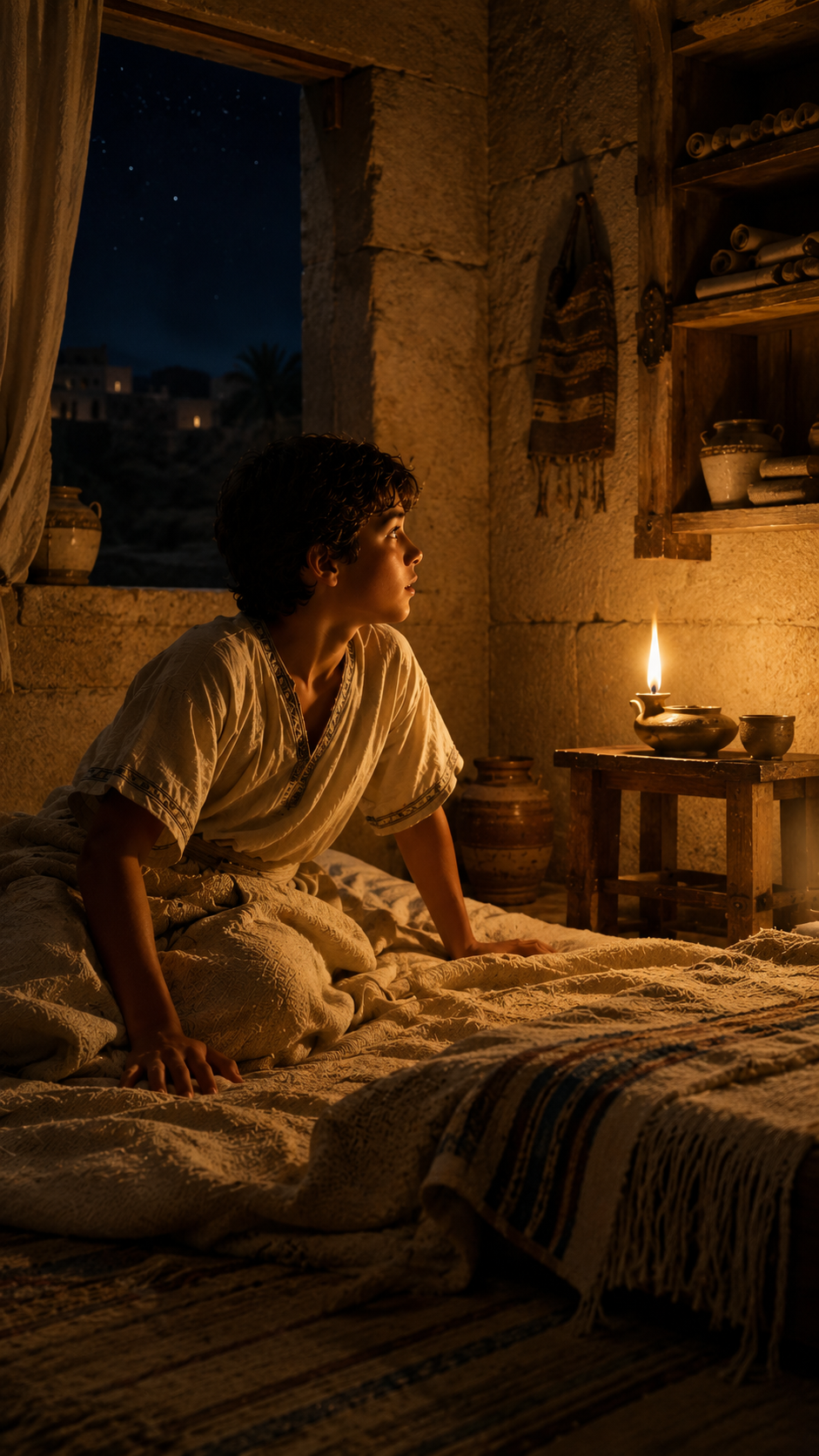
    In 1 Samuel 3, the boy Samuel hears his name in the night and does not yet know who is calling. He mistakes the voice of God for the voice of Eli. He gets up, walks to the priest, and says, “Here I am.” This happens more than once before the truth becomes clear.

    It is a simple scene, but it opens a deep path for prayer.

    For those who practice Lectio Divina, this passage is especially fitting because it teaches that listening to God often precedes understanding God. Samuel is responsive before he is discerning. He is available before he is certain. He does not begin with clarity. He begins with readiness.

    That is often where the spiritual life begins as well.

    Lectio Divina 1 Samuel

    Reading Slowly with Samuel

    Lectio Divina is not mainly a technique for mastering a text. It is a way of receiving Scripture prayerfully, slowly, and attentively. Traditionally, Christians have described it as a movement from reading, to meditation, to prayer, to contemplation. We come not merely to analyze but to attend. We read not only for information but for communion.

    This passage from 1 Samuel invites that kind of reading.

    Samuel lies down in the temple, near the ark of God. The lamp is still burning. The setting is quiet, watchful, almost suspended. Before anything is explained, the passage gives us an atmosphere of attentiveness. The scene itself teaches us to slow down.

    When you read this text in Lectio Divina, do not rush to the lesson. Stay with the scene. Notice the darkness, the silence, the repeated calling of Samuel’s name. Notice the movement of the boy rising and going to Eli. Notice, too, what Scripture says about the moment: “Samuel did not yet know the Lord.

    That small phrase is full of mercy.

    1 Samuel 3:1-10, ESV

    3 Now the boy Samuel was ministering to the Lord in the presence of Eli. And the word of the Lord was rare in those days; there was no frequent vision.

    2 At that time Eli, whose eyesight had begun to grow dim so that he could not see, was lying down in his own place. 3 The lamp of God had not yet gone out, and Samuel was lying down in the temple of the Lord, where the ark of God was.

    4 Then the Lord called Samuel, and he said, “Here I am!” 5 and ran to Eli and said, “Here I am, for you called me.” But he said, “I did not call; lie down again.” So he went and lay down.

    6 And the Lord called again, “Samuel!” and Samuel arose and went to Eli and said, “Here I am, for you called me.” But he said, “I did not call, my son; lie down again.” 7 Now Samuel did not yet know the Lord, and the word of the Lord had not yet been revealed to him.

    8 And the Lord called Samuel again the third time. And he arose and went to Eli and said, “Here I am, for you called me.” Then Eli perceived that the Lord was calling the boy. 9 Therefore Eli said to Samuel, “Go, lie down, and if he calls you, you shall say, ‘Speak, Lord, for your servant hears.’” So Samuel went and lay down in his place.

    10 And the Lord came and stood, calling as at other times, “Samuel! Samuel!” And Samuel said, “Speak, for your servant hears.”

    Listening Often Begins Before Understanding

    Many Christians feel discouraged because they are unsure whether they are hearing God rightly. They expect discernment to arrive as a kind of immediate confidence. But 1 Samuel 3 offers a gentler account of spiritual growth.

    Samuel hears truly before he understands truly.

    That matters. It means confusion is not always failure. Inexperience is not unfaithfulness. A person may be nearer to obedience than he realizes, even while still learning what obedience sounds like.

    In Scripture, God is not embarrassed by our immaturity. He teaches within it. He addresses Samuel not after Samuel has become spiritually polished, but while he is still young, still unformed, still dependent on guidance. The call comes in the middle of his limited understanding.

    For many readers, this is good news. If you struggle to know whether God is speaking, that struggle itself need not lead to despair. Discernment usually develops over time. It matures through prayer, Scripture, worship, wise counsel, and repeated acts of attention. The Christian life is rarely built on dramatic certainty. More often, it is formed through steady listening.

    God’s Patience Is Part of the Message

    The Lord calls Samuel again and again.

    The repetition is striking. God does not speak once and then withdraw in irritation when Samuel misunderstands. He calls patiently. He gives Samuel room to grow into recognition.

    This tells us something important about the character of God. Divine speech is not merely an act of disclosure; it is also an act of formation. God is not only delivering information. He is shaping a servant.

    Sometimes people fear that if they do not respond the first time perfectly, they will miss God entirely. This passage suggests otherwise. Certainly Scripture calls us to attentiveness and obedience. But it also reveals a God who is patient with learners.

    That patience does not make our response unimportant. It makes our response possible.

    When practiced faithfully, Lectio Divina trains us to trust that patient rhythm. We return to the text. We notice what we missed. We hear a phrase differently the second or third time. What seemed obscure at first begins to open. Not because we have forced the text to yield its meaning, but because we have stayed present long enough to receive it.

    The Gift of Spiritual Mentors

    Samuel does not discern the voice of God alone. Eli finally perceives what is happening and instructs him how to respond: “Speak, Lord, for your servant hears.”

    There is humility in this scene on both sides.

    Samuel is humble enough to keep getting up, to keep responding, to keep asking. Eli is humble enough to recognize that God is at work in someone younger than himself. Even near the end of his own ministry, Eli still serves as a guide.

    Christian discernment is rarely an isolated achievement. It is nurtured in community. Wise mentors, pastors, friends, and teachers often help us recognize what God is doing before we can name it ourselves. They do not replace the voice of God. They help us become more attentive to it.

    In a culture that prizes independence, this can be hard to accept. We may want a spirituality of direct access without dependence on others. Yet the biblical pattern is often otherwise. God uses the church, spiritual friendship, and the wisdom of the saints to train our hearing.

    If you are uncertain about what God may be saying, it may help to ask not only “What am I hearing?” but also “Who helps me listen well?”

    “Here I Am” as a Posture of the Heart

    One of the most beautiful details in this passage is Samuel’s repeated response: “Here I am.”

    At first, he says it to Eli. Eventually, under Eli’s instruction, he says it to the Lord. In either case, the posture is the same. He presents himself.

    This is essential for Lectio Divina. The goal is not spiritual performance. The goal is presence. We do not come to Scripture to prove attentiveness, but to offer it. We place ourselves before God and say, in effect, “Here I am.” Not accomplished. Not impressive. Simply available.

    That posture may be harder than it sounds. Many of us approach prayer with anxiety, measuring whether we are doing it well enough. But Samuel’s story shifts the focus. Availability matters more than achievement. Receptivity matters more than display.

    To say “Here I am” is to loosen our grip on self-importance. It is to stop curating an impressive spiritual life and to begin offering an honest one.

    Practicing This Passage in Lectio Divina

    As you sit with 1 Samuel 3:1–10, read slowly enough to notice which word or phrase seems to rest on your attention. It may be Samuel’s name. It may be “Here I am.” It may be “did not yet know the Lord.” It may be Eli’s instruction, “Speak, for your servant hears.”

    Stay there.

    Repeat the phrase gently. Let it become prayer. If confusion rises, do not treat that as interruption. Bring that confusion into the presence of God. You do not need dramatic impressions. You do not need to manufacture a message. The point is not to force an experience but to become available.

    If you are unsure whether you are hearing God’s voice, begin with what God has already made clear in Scripture: he is holy, patient, truthful, and faithful. He does not contradict his character. The more deeply our minds and affections are formed by Scripture, the more steadily our discernment grows. Over time, faithful listening becomes less about chasing unusual experiences and more about learning the Shepherd’s tone through long familiarity.

    This is one reason practices of daily prayerful reading matter. Small acts of attention accumulate. They school the heart.

    Readers who would like a complete year of daily Scripture readings, guided reflections, writing prompts, prayers, and contemplative practices can continue their journey through The Morning Scriptorium: 365 Days of Lectio Divina and Contemplative Writing.

    And the online course: https://teachclub.com/@morning_scriptorium

    A Prayer for Listening

    Lord, teach us to hear you with humble and steady hearts. Quiet our hurry, soften our pride, and make us willing to say, “Here I am.” Give us patience when understanding comes slowly, and form in us the life of attentive obedience. Amen.

    Reflection Questions

    1. What word or phrase in 1 Samuel 3:1–10 most draws your attention today?
    2. Where in your life might God be inviting availability before certainty?
    3. Who has helped you recognize God’s voice with greater clarity and humility?

    Come Back Tomorrow

    Return tomorrow for the next day’s Lectio Divina reading, and continue the slow work of listening in the presence of God.