Why the Knowledge of God Matters
Christian theology begins with God because Christian faith begins with God. The church does not first gather around a moral program, a cultural identity, or a private spiritual preference. It gathers because the living God has made himself known. To study theology, then, is not to move away from worship into abstraction. It is to ask with greater care who God is, how God has acted, and how the truth of God should shape the life of the church.
The doctrine of God has always occupied a central place in Christian thought. Scripture presents God as holy, wise, righteous, merciful, and faithful. The church’s theological tradition has sought to speak truthfully about God in a way that honors divine transcendence while also confessing God’s nearness in covenant, revelation, and redemption. When Christians neglect this task, worship can become thin, sentimental, or governed more by preference than by truth. When Christians recover it, worship is deepened by reverence, gratitude, and joy.
God as the Center of Theology
All Christian doctrine is in some sense ordered toward the knowledge of God. Creation tells us that the world is not self-originating but dependent upon the wisdom and will of its Maker. Providence tells us that history is not abandoned to chaos but upheld by divine faithfulness. Redemption tells us that salvation is not a human achievement but the gracious work of God. Even doctrines that seem at first to concern humanity, the church, or ethics are properly understood only in relation to God.
This is why the doctrine of God is not merely one topic among many. It gives coherence to the whole theological enterprise. If God is holy, then sin must be understood as rebellion against holiness. If God is love, then grace must be understood as the free and undeserved gift of divine mercy. If God is triune, then Christian communion and mission are grounded in the life of the Father, Son, and Holy Spirit. Theology becomes disordered when God is treated as an afterthought rather than as the beginning and end of Christian understanding.
The Biblical Witness to God’s Character
Scripture speaks of God with both clarity and wonder. The Lord is the creator of heaven and earth, the one who calls Israel, judges evil, delivers the oppressed, and remains faithful to his promises. In the New Testament, the fullness of divine self-disclosure is given in Jesus Christ, who reveals the Father and sends the Spirit. The biblical witness does not reduce God to a concept. It presents God as the living Lord who acts, speaks, commands, forgives, and redeems.
At the same time, Scripture teaches that God is unlike the world he has made. God is not limited, changeable, or dependent in the way creatures are. Christian theology has therefore used careful language to confess God’s eternity, immutability, omnipotence, wisdom, and goodness. These affirmations are not speculative additions to the Bible. They are attempts to read Scripture faithfully and to speak of God in a way that protects the truth of divine majesty.
To know God rightly is to be drawn into reverence, trust, and praise.
Doctrine and the Practice of Worship
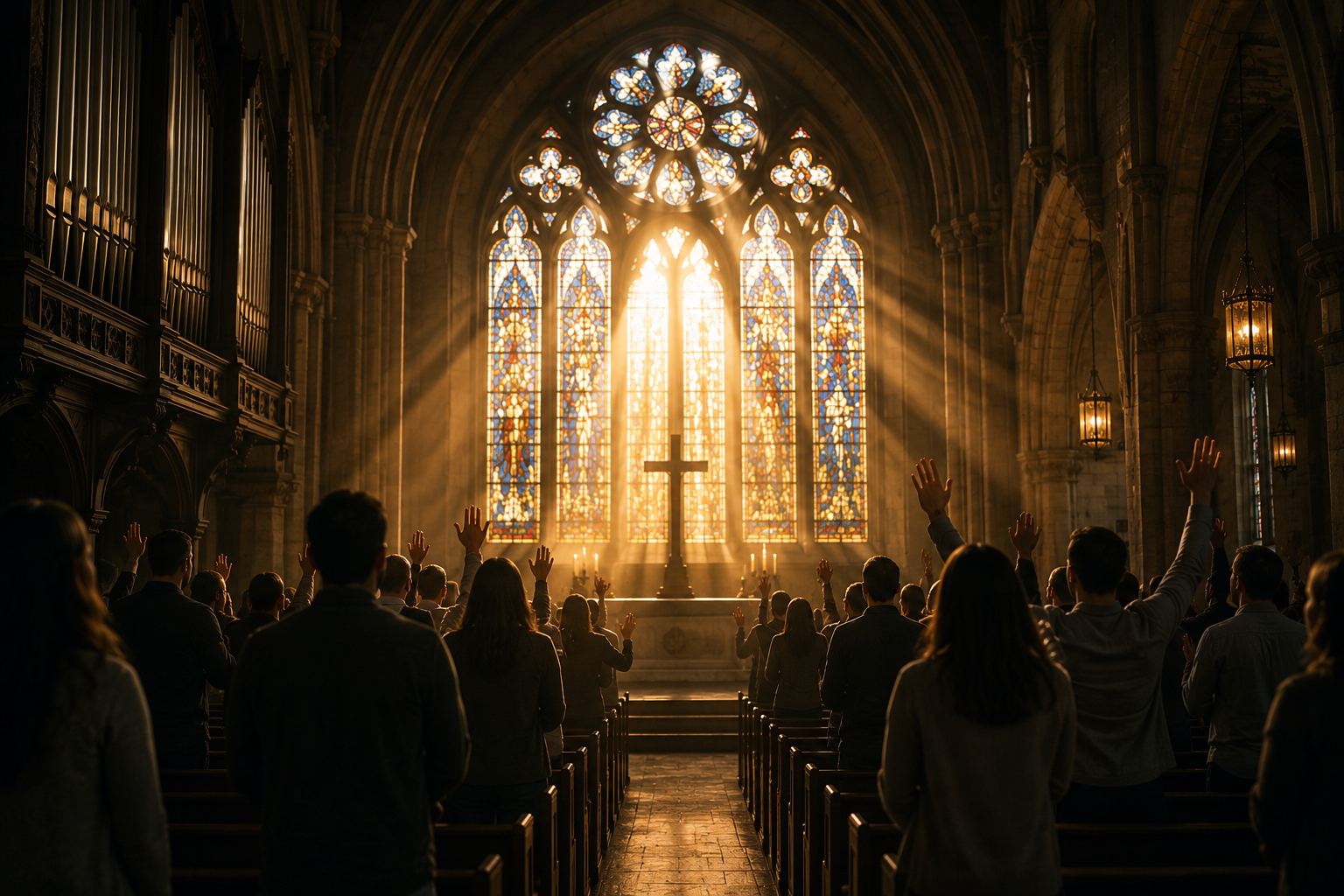
Worship is never detached from doctrine. Every prayer, hymn, confession, and sermon assumes something about who God is. If God is imagined as distant, worship may become formal without warmth. If God is imagined as merely indulgent, worship may lose its sense of holiness and repentance. If God is known as the triune Lord who is both holy and merciful, worship can hold together awe, confession, thanksgiving, and hope.
The church’s liturgy has long served as a school of theology. In worship, believers learn to address the Father through the Son in the power of the Holy Spirit. They learn to confess sin because God is righteous. They learn to receive pardon because God is gracious. They learn to sing praise because God is worthy. Sound doctrine does not compete with worship. It gives worship its proper object and shape.
The Trinitarian Shape of Christian Faith
One of the church’s greatest theological achievements was its careful articulation of the doctrine of the Trinity. The confession that God is one in essence and three in persons is not a philosophical puzzle imposed on Scripture. It is the church’s faithful response to the biblical witness that the Father is God, the Son is God, and the Holy Spirit is God, while there is only one God. This doctrine protects the gospel itself, for salvation is the work of the triune God.
Trinitarian doctrine also shapes Christian worship in a direct way. Baptism is given in the name of the Father, Son, and Holy Spirit. Prayer is offered to the Father through the Son by the Spirit. Doxology rises from the church because the life of God is not solitary but eternally full of communion and love. To worship the triune God is to be formed by the truth that the God who saves is the God who is eternally Father, Son, and Spirit.
Why Serious Study Serves the Church
In some settings, theology is treated as impractical because it requires patience, precision, and disciplined reading. Yet the church is not served by vagueness. It is served by truth. Pastors, teachers, and thoughtful lay Christians need theological depth in order to read Scripture well, resist confusion, and worship with understanding. Serious study is not opposed to devotion. It is one of the means by which devotion is strengthened and purified.
For independent learners especially, the study of theology can provide a framework for lifelong Christian formation. It helps students connect biblical interpretation, historical theology, doctrine, and practice. It also trains them to ask better questions: What does the church confess about God? Why has this confession mattered across the centuries? How should it shape prayer, discipleship, and public witness today? These are not merely academic questions. They are questions for the life of faith.
A Beginning for Further Study
The doctrine of God stands at the heart of Christian theology because God stands at the heart of Christian faith. To study this doctrine is to seek a more faithful understanding of the one whom the church worships and proclaims. Such study requires humility, attentiveness to Scripture, and respect for the wisdom of the Christian tradition. But it also yields a richer and steadier vision of the Christian life.
For learners who want a rigorous introduction to the central themes of theology, a structured course of study can provide the right starting point. The goal is not merely to accumulate information, but to grow in theological judgment, biblical understanding, and the capacity to worship God with mind and heart together.
Study Theology with THEORIA
If you want to build a strong foundation in Christian doctrine, begin with Introduction to Christian Theology. This course offers a clear and serious entry point into the study of theology for independent learners seeking depth, clarity, and academic formation.
- Learn the central doctrines of the Christian faith
- Develop a stronger framework for reading Scripture
- Connect theology to worship, discipleship, and the life of the church