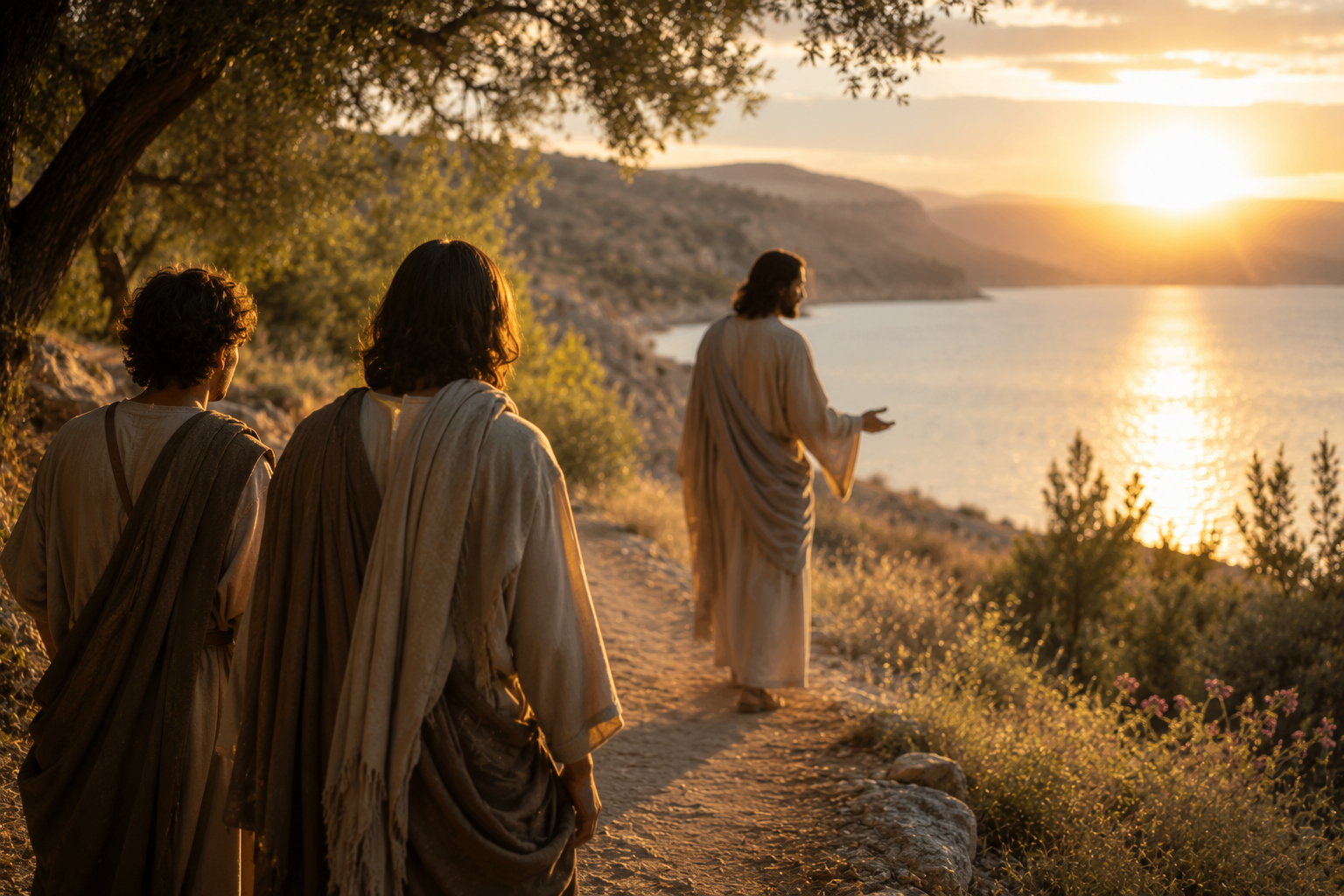
John 1:35–39 gives us a quiet beginning.
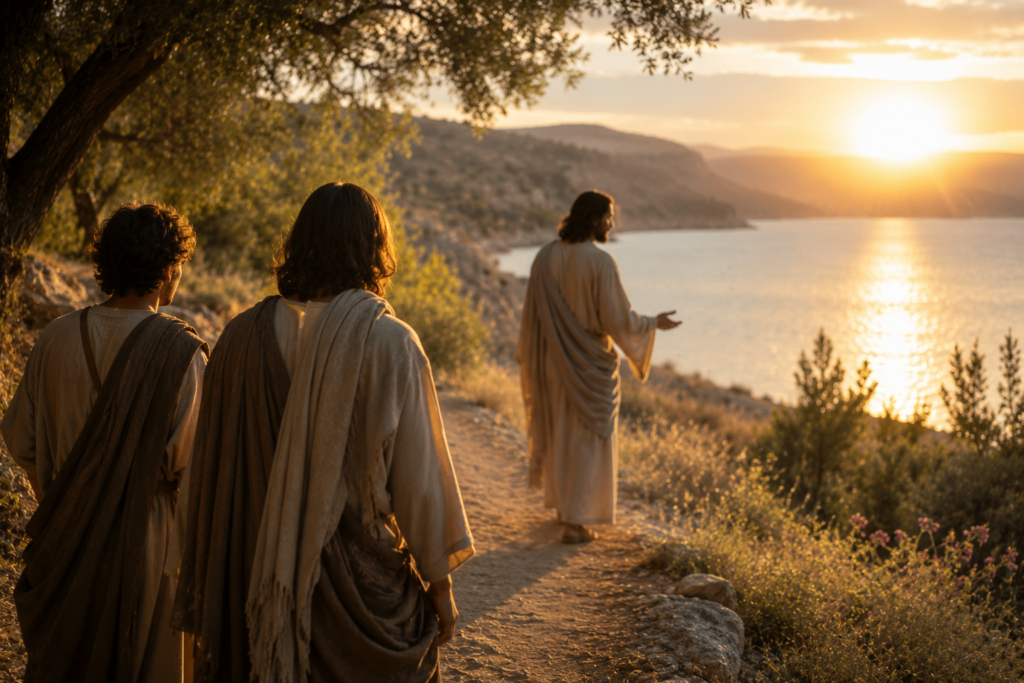
Two disciples hear John the Baptist point to Jesus and say, “Behold, the Lamb of God.” They begin to follow. Jesus turns and asks them his first recorded words in John’s Gospel: “What are you looking for?”
That question reaches far beyond the moment.
It is not only a question for those first disciples. It is a question every believer continues to answer throughout life. What are you looking for? What do you seek when you come to prayer, when you open Scripture, when you order your days as you do? What are you hoping Jesus will be for you?
These are not small questions. They are not meant to be answered quickly.
This is one reason John 1:35–39 is so well suited to Lectio Divina. Lectio Divina is the slow, prayerful reading of Scripture, a way of listening rather than merely scanning. We read attentively, notice what draws our attention, respond in prayer, and remain quietly with the text. This passage invites exactly that kind of reading because it centers on desire, presence, and the beginning of relationship.
Jesus does not begin by offering a lecture. He begins with a question.
What Are You Looking For?
The question is simple, but it is not superficial.
Jesus does not ask, “What do you know?” He asks, “What are you looking for?” He speaks to desire before he speaks to certainty. He addresses the heart before the intellect. He invites honesty before explanation.
Many of us are used to speaking about faith in terms of belief, doctrine, or commitment. Those things matter deeply. But beneath them often lies a more hidden layer of longing. We come to Christ with ambitions, fears, griefs, hopes, needs, and expectations. Some of them are noble. Some are confused. Some are mixed together in ways we do not fully understand.
Jesus’ question makes room for that complexity.
It invites examination without shame. It asks us to tell the truth about what moves us. Not the polished answer. The real one.
Very often, our daily choices reveal what we are looking for more clearly than our stated beliefs do. The way we spend time, the thoughts we return to, the worries we rehearse, the comforts we reach for, the approval we chase—these can all uncover the deeper movements of the heart.
To hear Jesus ask, “What are you looking for?” is to be called into gentle self-examination.
Hearing About Jesus and Encountering Him
The two disciples had already heard about Jesus before they followed him.
John the Baptist had spoken truly. His testimony mattered. But hearing testimony is not the same thing as personal encounter. At some point, borrowed language must give way to lived relationship.
That is what begins here.
The disciples respond, “Rabbi, where are you staying?” On one level, it is a practical question. On another, it reveals something deeper. They want more than a passing exchange. They want proximity. They want to remain near him long enough to know him.
Jesus answers, “Come and you will see.”
This is one of the most beautiful invitations in the Gospels because it does not force certainty before relationship begins. Jesus does not say, “Understand everything first.” He does not say, “Prove your worthiness.” He does not even begin with a full explanation of what discipleship will cost. He says, in effect: come closer. Stay near. See for yourself.
Faith often begins there.
Not with having all the answers, but with willingness. Not with a dramatic moment alone, but with the decision to draw near and remain.
Curiosity Is Not the Enemy of Faith
Some believers have been taught to distrust curiosity, as though honest questions signal weakness. But in John 1, curiosity is part of the beginning.
The disciples do not yet know everything. They do not fully understand who Jesus is. But they are drawn. They follow. They ask where he is staying. Their questions are not obstacles to discipleship; they are part of its first steps.
There is a kind of premature certainty that can actually keep us at a distance from Christ. We may cling to tidy answers because they feel safe. We may prefer conclusions over communion. But Jesus invites something more personal and more costly: time with him.
Curiosity, when offered honestly, can be an opening to grace.
It allows us to ask without pretending. It makes space for wonder. It helps us resist the temptation to reduce faith to slogans. It teaches us to seek, not merely to repeat.
This kind of seeking is not opposed to trust. It is often one of the ways trust begins to grow.
John 1:35-39, ESV
The next day again John was standing with two of his disciples, and he looked at Jesus as he walked by and said, “Behold, the Lamb of God!” The two disciples heard him say this, and they followed Jesus. Jesus turned and saw them following and said to them, “What are you seeking?” And they said to him, “Rabbi” (which means Teacher), “where are you staying?” He said to them, “Come and you will see.” So they came and saw where he was staying, and they stayed with him that day, for it was about the tenth hour.
The Importance of Proximity
One of the central movements in this passage is simple: the disciples go with Jesus, “and they stayed with him that day.”
That small detail carries tremendous weight.
We cannot know Christ from a distance. We may know ideas about him, opinions about him, even correct theology about him. But discipleship is formed through nearness. Through abiding. Through repeated return.
In ordinary Christian life, that nearness is cultivated through habits that seem modest and unspectacular: prayer, Scripture, silence, worship, repentance, attentiveness. These are not ways of earning intimacy with Christ. They are ways of making room for it.
To remain near Jesus requires time.
It requires resisting the hurried habits that make all relationships shallow. It requires a willingness to be interrupted, corrected, and changed. It asks us to stay long enough that our stated desires and our actual desires can be brought into the same light.
Contemplative practice is especially helpful here. It teaches us not merely to learn about Jesus, but to remain with him. It slows us enough to notice what we are carrying into his presence. It helps us become attentive to the ways our desires are purified and redirected over time.
Desire and the Christian Life
Jesus’ question brings desire into the center of discipleship.
This matters because desire is not incidental to the spiritual life. It shapes it. What we seek, love, fear, and hunger for will quietly direct how we live. The Christian life is not only about managing behavior or affirming truths. It is also about the transformation of desire.
That transformation rarely happens all at once.
Often we begin by wanting many things at once. We want God, but we also want control. We want peace, but we also want the world arranged on our terms. We want holiness, but we also want comfort. We want to follow Jesus, but we hope he will not ask us to surrender the deeper attachments we protect.
John 1 does not condemn this complexity. It exposes it gently.
“What are you looking for?” is not asked to humiliate us. It is asked to lead us into truth. Christ meets us in our mixed motives, but he loves us too much to leave them unexamined. Over time, staying near him reveals what governs us and what must be surrendered.
Honest Questions Instead of Easy Answers
There is a spiritual discipline in asking honest questions and letting them remain open before God.
Not every question must be solved immediately. Some questions are meant to deepen us before they clarify us. Some are invitations to prayer more than problems to resolve.
John 1:35–39 shows us a way of beginning. The disciples do not arrive with polished spiritual language. They respond from where they are. They move toward Jesus with what light they have.
That is enough for a beginning.
Many people delay prayer because they think they need cleaner motives or firmer conviction first. But the passage suggests otherwise. Christ’s invitation meets us in motion. As we come, we see. As we stay, we learn. As we remain, we are changed.
Transformation often begins quietly, almost imperceptibly. Not always through dramatic conversion stories, but through the repeated choice to come and stay.
The Hour They First Stayed With Him
John includes an intriguing detail: “It was about the tenth hour.”
Why remember the time?
Because encounters with Christ leave marks. Something about that first staying was so significant that the memory remained vivid. It was not merely a transfer of information. It was an experience of presence.
Many believers can point to such moments. Not always spectacular ones. Sometimes they are quiet and deeply personal: a passage that opened unexpectedly, a prayer in which Christ felt near, a day when everything did not change outwardly but something shifted inwardly. These moments remain because relationship leaves an impression.
Yet John 1 also reminds us that the lasting memory came not from a brief glance, but from staying.
There is wisdom here for our own lives. We often want immediate clarity, but Christ frequently forms us through continued presence. The significant hour may begin with a simple willingness to remain.
A Writing Practice: “What I Am Looking For”
Today’s contemplative writing exercise can help bring Jesus’ question closer.
Take a few quiet minutes and write under the heading:
What I am looking for
Write honestly.
Include practical desires as well as spiritual ones. You may find yourself writing about rest, stability, recognition, healing, clarity, love, usefulness, freedom from anxiety, deeper prayer, or simply enough strength for today. Do not censor too quickly. Let the page reveal what the heart has been carrying.
Then read over what you have written and pause with the one answer that surprises you most.
Stay with it.
Ask why it surfaced. Ask what it reveals. Ask whether it is something Christ wants to purify, deepen, redirect, or gently receive. This practice can uncover the deeper movements of the heart that Jesus invites us to examine—not to shame us, but to draw us nearer in truth.
Sometimes we do not know what we are looking for until we see it in words.
Come and See Through Lectio Divina
This passage naturally lends itself to Lectio Divina because it is full of invitation.
Read it slowly once.
Then read it again and notice which phrase holds your attention. Perhaps it is “What are you looking for?” Perhaps it is “Where are you staying?” Perhaps it is “Come and you will see.” Or perhaps it is simply the quiet line that they “stayed with him that day.”
Let one phrase remain with you.
Do not hurry to explain it. Let it question you. Let it settle. Pray with it. Sit with Christ in the words. The goal is not to master the passage quickly, but to spend time with the One the passage reveals.
This is where contemplative practice becomes so valuable. It teaches us to remain with Christ long enough that desire can be examined, clarified, and healed.
Staying With Christ in Ordinary Life
Most discipleship is lived in ordinary hours.
Not on mountaintops, but in routines. In the choices we make with our mornings, our attention, our words, our devices, our fatigue, our small obediences. Proximity to Christ is formed there.
To come and see is not only an invitation for the beginning of faith. It remains an invitation throughout the Christian life. Come again. Stay again. Return again.
If you would like help cultivating that daily rhythm, The Morning Scriptorium: 365 Days of Lectio Divina and Contemplative Writing offers a full year of Scripture readings, guided reflections, writing prompts, prayers, and contemplative practices.
And the online course:
https://teachclub.com/@morning_scriptorium
Come and Stay
John 1:35–39 does not invite us merely to learn about Jesus.
It invites us to spend time with him.
That is where discipleship begins and where it continues: in attentive presence, in honest desire, in questions offered without pretense, in the quiet courage to come closer. We do not need to arrive with complete understanding. We need willingness to follow and remain.
So perhaps that is the invitation for today.
Not to solve everything.
Not to force spiritual certainty.
But to hear Jesus ask, “What are you looking for?” and to answer honestly. Then to receive his words as they are given: Come and you will see.
Spend time with Christ today, not merely learning about him but remaining near him.
Closing Prayer
Lord Jesus,
You know what I am looking for even when I struggle to name it.
Draw me near to you with honesty and trust.
Teach me to remain with you long enough for my desires to be purified and my heart made more true.
Give me grace to come, to stay, and to see.
Amen.
Reflection Questions
1. When Jesus asks, “What are you looking for?” what honest answer rises first in your heart?
2. Where in your life are you tempted to keep Jesus at a distance rather than remain near him?
3. What simple practice could help you spend time with Christ this week rather than merely thinking about him?
Return Tomorrow
Return tomorrow for the next day’s Lectio Divina reading, and continue this slow journey of prayerful attention in the presence of Christ.
If you’d like, share in the comments what question Jesus’ words, “What are you looking for?” stirred in your heart today.